#M5Stack, #M5StickCPlus2 #Pomodoro #Sandglass #SpatialInteractionDesign
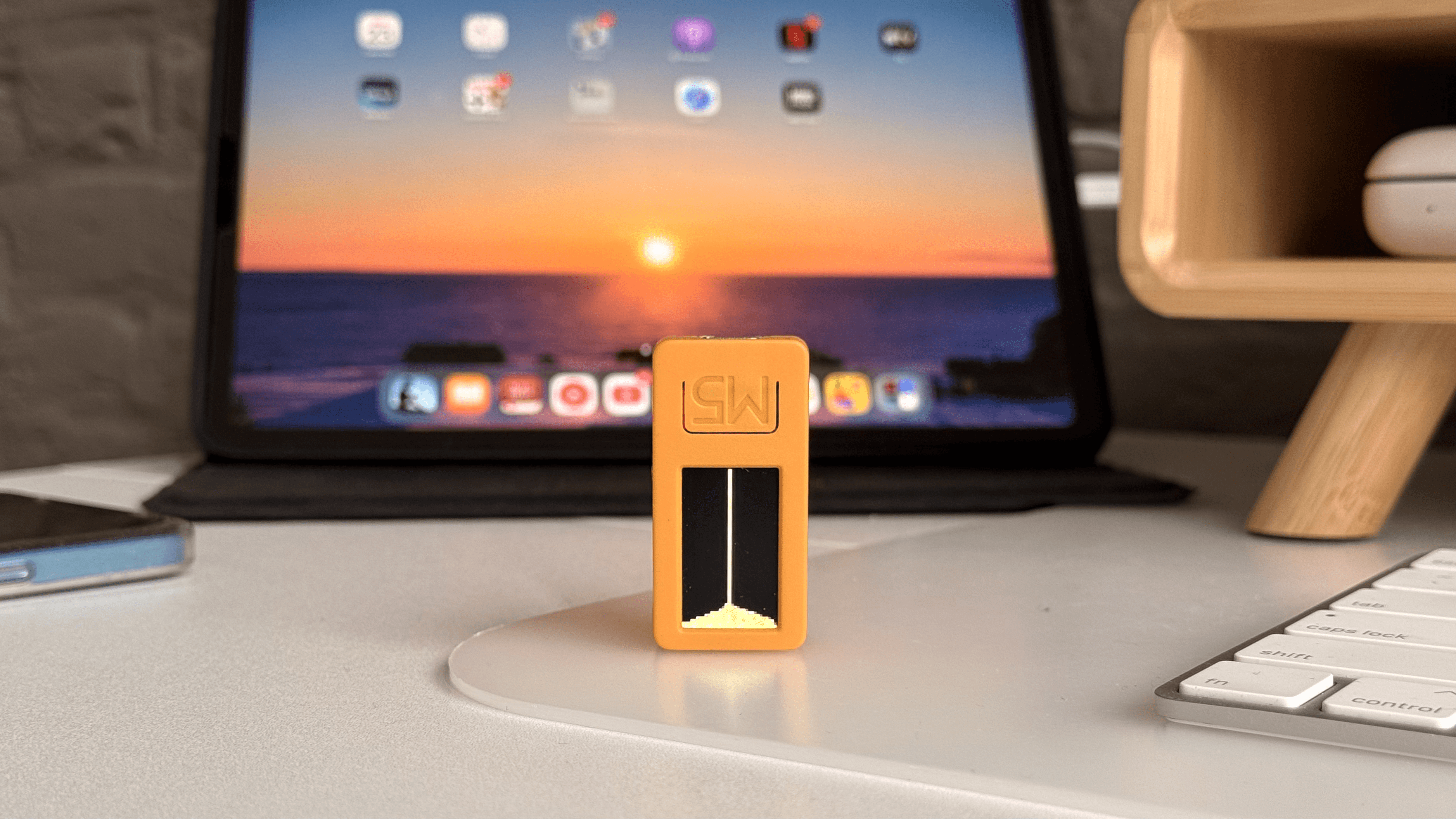
The Pomodoro Technique is simple and practical: 25 minutes of focused work, followed by 5 minutes of rest. A structured work–pause–repeat rhythm that helps you commit to focused time and move tasks forward.
What never felt quite right to me was how it shows up in both the interaction and the interface.
You have to tap every time. Start, stop, restart. Each session begins with a deliberate action before you can actually focus. Repeated throughout the day, that small trigger becomes friction. And once it starts, the dominant visual is a shrinking number. The screen centers the countdown. Instead of feeling contained within a block of focus, it can feel like you’re watching time being consumed.
So…
What if the buttons were removed?
What if it didn’t show the timer?
Here I'm exploring an idea with an M5StickC Plus 2. It’s small and self-contained, so the screen is limited. Whatever appears on it has to be deliberate. There’s no space for layered controls or secondary information.
It also has built-in motion sensors that detect orientation and movement. That means interaction doesn’t have to depend on tapping. The device responds to how it’s positioned. Upright, flat, flipped. The interaction becomes spatial instead of purely screen-based.
The Concept
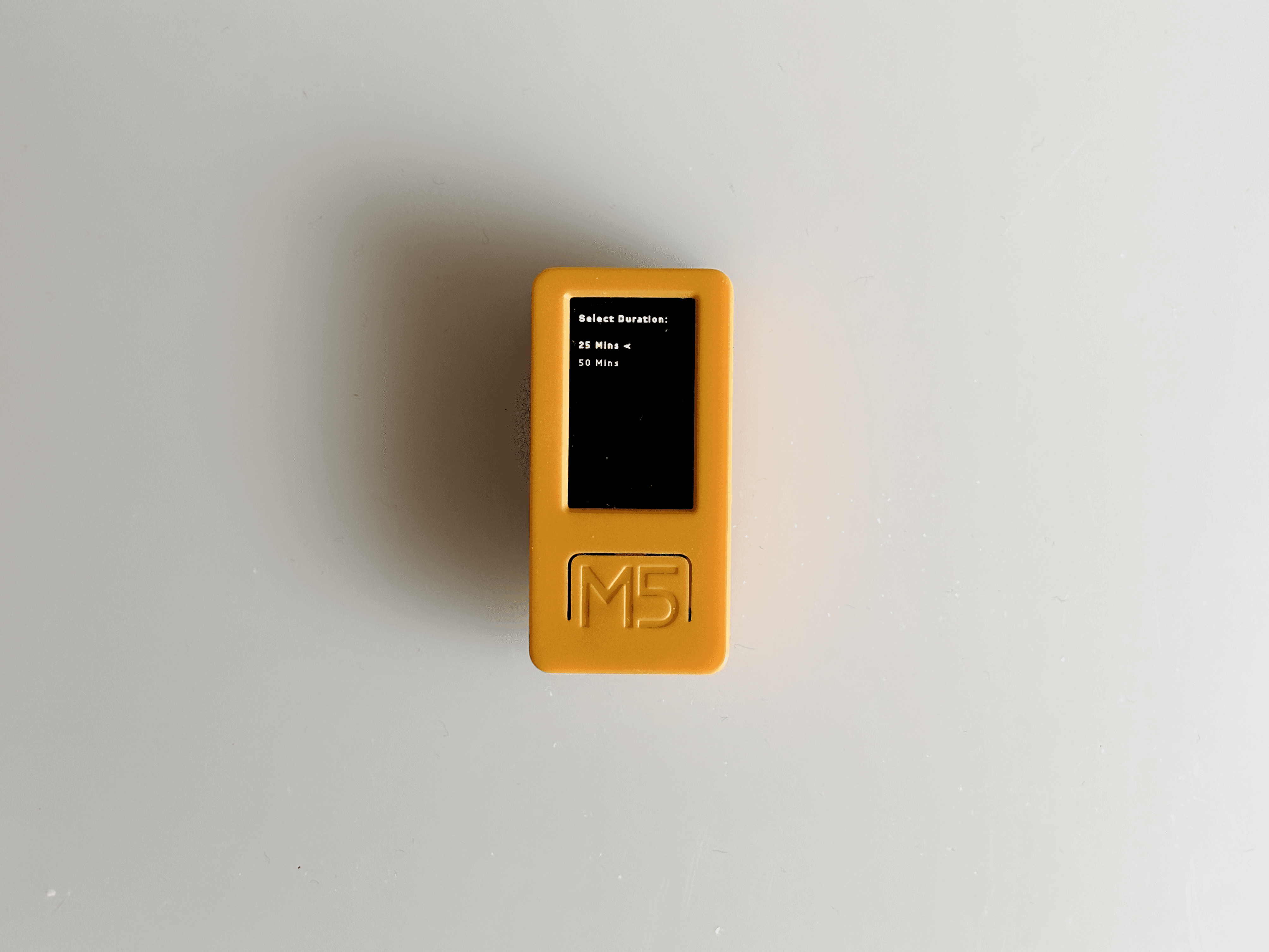
Choose 25 or 50 minutes.
Stand the device upright, and sand begins to fall. The device behaves like a sandglass.
Grain by grain, one half empties while the other slowly fills. Under the surface, the sand follows simple gravity and collision logic.
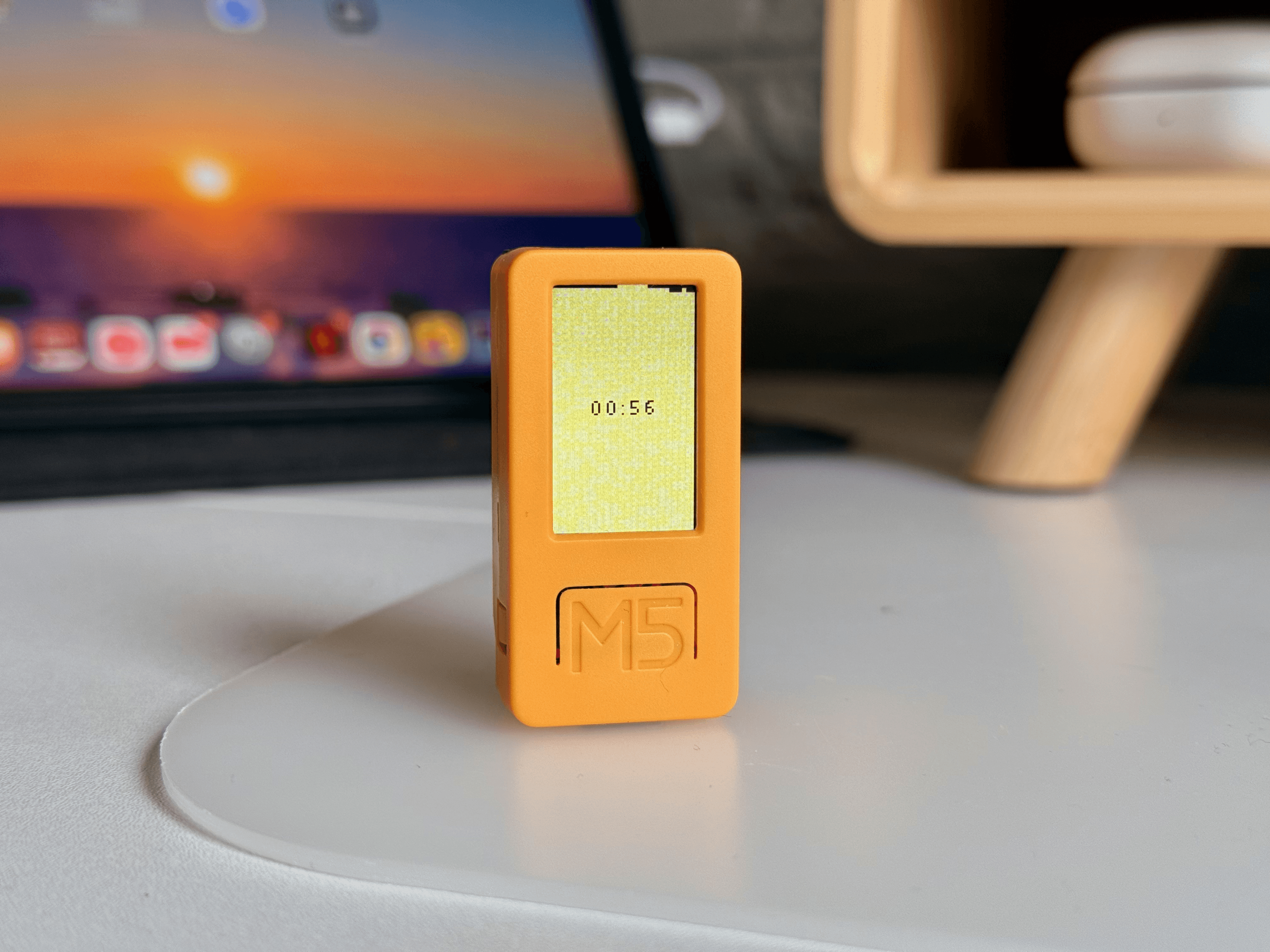
The numeric timer only appears in the last three minutes. I didn’t want precision to dominate the entire session. Early on, the goal is immersion. As the session nears its end, I think showing the remaining time can support closure and help you wrap up or prepare to pause.
Interaction Model
From an interaction perspective, this became an exploration of digital and physical alignment. The interface is digital, but the interaction is physical. I wanted the behavior to work the way a sandglass works. When the device stands upright, sand falls. When it lies flat, the flow stops. When it’s flipped, the cycle begins again. The orientation of the object defines the state of the system. There are no buttons cycling through modes and no extra UI layers explaining what’s happening. The physical gesture directly controls the digital simulation.
Reflection
After spending some time with it, a few things stood out to me.
Representation shapes experience
The structure of Pomodoro didn’t change, only the interface did. Numbers felt rigid to me. They constantly reminded me that time was ticking down. With sand, the timer fades into the background. It feels less like watching something disappear and more like watching something flow. The underlying system stays the same, but the emotional framing shifts completely.Physical intuition reduces friction
This experiment made me wonder whether physical intuition reduces friction. When a digital system behaves the way a physical object behaves, it requires less explanation. I don’t have to think about it as much.Feeling is a differentiator
The structure stayed the same. The logic stayed the same. The function stayed the same. But the experience was different. In a world where building functional products is easier than ever, function alone doesn’t make something stand out. Feeling does. This exploration became an exercise in designing for that.
Resources
You can get the code here: https://github.com/thebuddyman/m5-playground/blob/main/apps/pomodoro_sandglass_app.py
Falling sand mechanics are inspired by https://jason.today/falling-sand
Music used: reset, restart, focus - the cozy lofi

Hi, I’m Thomas. Originally from Indonesia, now based in the Netherlands.
I’ve spent 15 years in tech, moving between engineering, design, and product. These days I’m building bloomworks, my own product studio, where I work with founders and organizations on digital products for well-being and mental health.
We also make our own things. One of them is Little Haven, a retro pixel pet designed around mental health and well-being. Think Tamagotchi, except this one tries to take care of you too.
Alongside that, I write about design and AI, mostly around how AI is changing the way we design, prototype, and build.
If you’re working on a project where design, technology, and wellness come together, I’d love to hear about it. Say hi – hi@thebuddyman.com